
Discerning real pearls from fake ones can be a challenging task, particularly given the abundance of pearl varieties available today. With the proliferation of online retailers, the risk of purchasing counterfeit items increases, making it crucial to understand how to distinguish genuine pearls. This guide offers practical advice on recognizing the real deal to ensure your investment in this timeless treasure is secure.
Artificial pearls are manufactured using a range of synthetic materials such as glass, plastic, ceramic, and shell, often coated with a fish-skin varnish to mimic the natural luster of genuine pearls. These replicas can be deceivingly realistic, especially when sold by unscrupulous vendors who market them as real.
Here are nine straightforward, non-destructive methods to help you verify the authenticity of pearls:
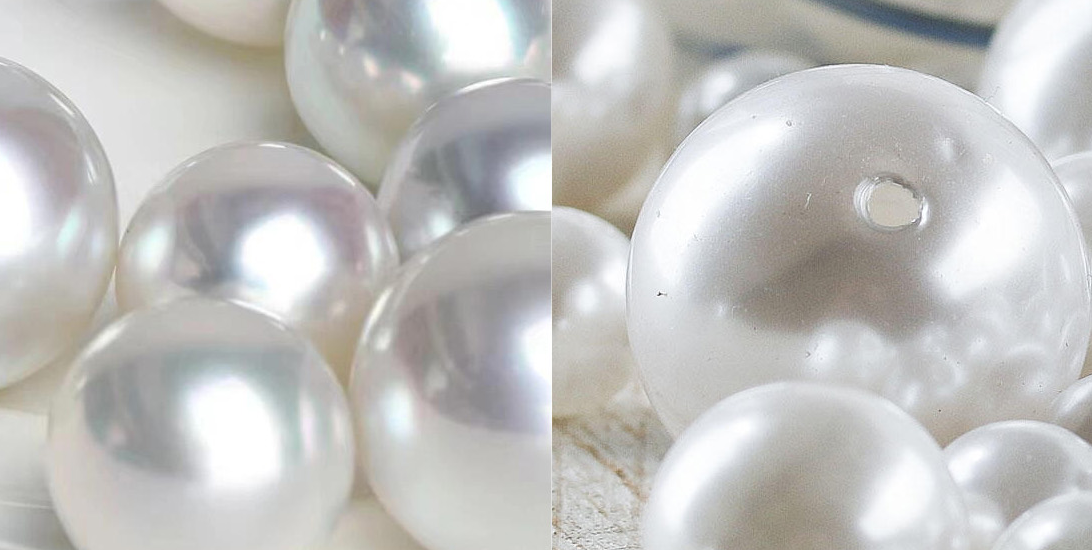
1. Examine the Surface: Real pearls feature subtle imperfections akin to fingerprints, giving them a unique character. Under close inspection, you’ll notice slight irregularities and ridges. In contrast, imitation pearls have uniformly smooth surfaces.
2. Assess the Overtone: Authentic pearls exhibit a vivid, luminous overtone. Counterfeits, however, often have a dull, whitish appearance lacking the vibrancy of genuine pearls.
3. Check Reflectivity: Genuine pearls reflect light elegantly. If held against a light source, you should observe a gentle glimmer. Imitations lack this reflective quality, appearing rather flat.
4. Inspect Size and Shape Consistency: Natural pearls vary in size and shape due to their organic formation. Each pearl in a strand will display its own distinct characteristics. Fake pearls, on the other hand, are mass-produced to uniform standards.
5. Examine Drill Holes: Real pearls are meticulously drilled from both ends to meet in the center, resulting in smaller, more precise holes. Imitations often bear larger, straighter holes.
6. Conduct the Body Heat Test: Genuine pearls feel noticeably cool upon initial touch but quickly adjust to body temperature. Fake pearls tend to retain a consistent, room-temperature feel.
7. Evaluate Weight: Real pearls are significantly heavier than their artificial counterparts. A strand of genuine pearls should feel noticeably dense in your hand.
8. Perform the Tooth Test: Gently running a strand of pearls over your teeth can reveal their authenticity. Real pearls will have a slightly gritty texture, whereas fakes will feel unnaturally smooth. This method should only be used with personal items, not in a retail setting.
9. Test for Silkiness: Authentic pearls have a smooth, silky texture when rolled between your fingers. Imitations might feel stickier or less refined.
Remember, the best defense against purchasing fake pearls is thorough research and buying from reputable, certified sellers. Always seek out customer reviews and ask for certification or authentication when considering a significant purchase. By arming yourself with knowledge and exercising caution, you can ensure that your pearl acquisitions are both beautiful and genuine.